


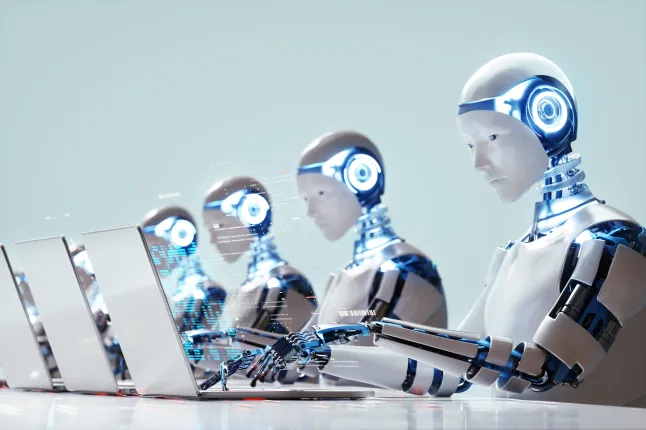
Artificial Intelligence (AI) is rapidly transforming the world of Human Resources. From screening resumes and scheduling interviews to handling payroll and answering employee queries through chatbots, AI has made HR operations faster, smarter, and more data-driven. But the big question remains: Can—or should—HR be fully replaced by AI?
What AI Does Well in HR
AI excels at repetitive, rule-based tasks. It can:
- Automate recruitment by scanning resumes, identifying keywords, and shortlisting candidates in seconds.
- Predict attrition by analysing patterns in employee engagement and performance data.
- Enhance employee experience with 24/7 virtual HR assistants to answer common questions on leave, benefits, or policy.
- Streamline training by personalising learning modules based on employee skill gaps.
These functions not only reduce workload for HR teams but also minimise human bias in some decision-making processes.
Where AI Falls Short
However, HR is not just about processes—it’s about people. AI struggles in areas that require empathy, context, and ethical judgment:
- Difficult conversations like layoffs, conflict resolution, or harassment complaints cannot be managed by an algorithm.
- Cultural sensitivity is hard to code—AI may misinterpret behaviour or communication nuances.
- Employee trust is built through authentic relationships, not automated scripts.
- Ethical risks loom large when AI makes decisions about hiring or promotions. Biases hidden in data can reinforce discrimination instead of removing it.
The Value of Human Touch
HR professionals play a vital role as mediators, mentors, and culture-builders. They provide emotional support during crises, shape organisational values, and help employees navigate career growth. These are responsibilities no machine can fully replicate.
The Way Forward: Collaboration, Not Replacement
The future of HR lies in human-AI collaboration. AI should handle the heavy lifting of data and administration, while humans focus on strategy, empathy, and ethical decision-making. This partnership allows HR teams to be more efficient without losing the human element that defines workplace culture.
As organisations embrace automation, the challenge is to balance efficiency with empathy. After all, at the heart of every company are its people—and people will always need the human touch.


 Get it on Play Store