


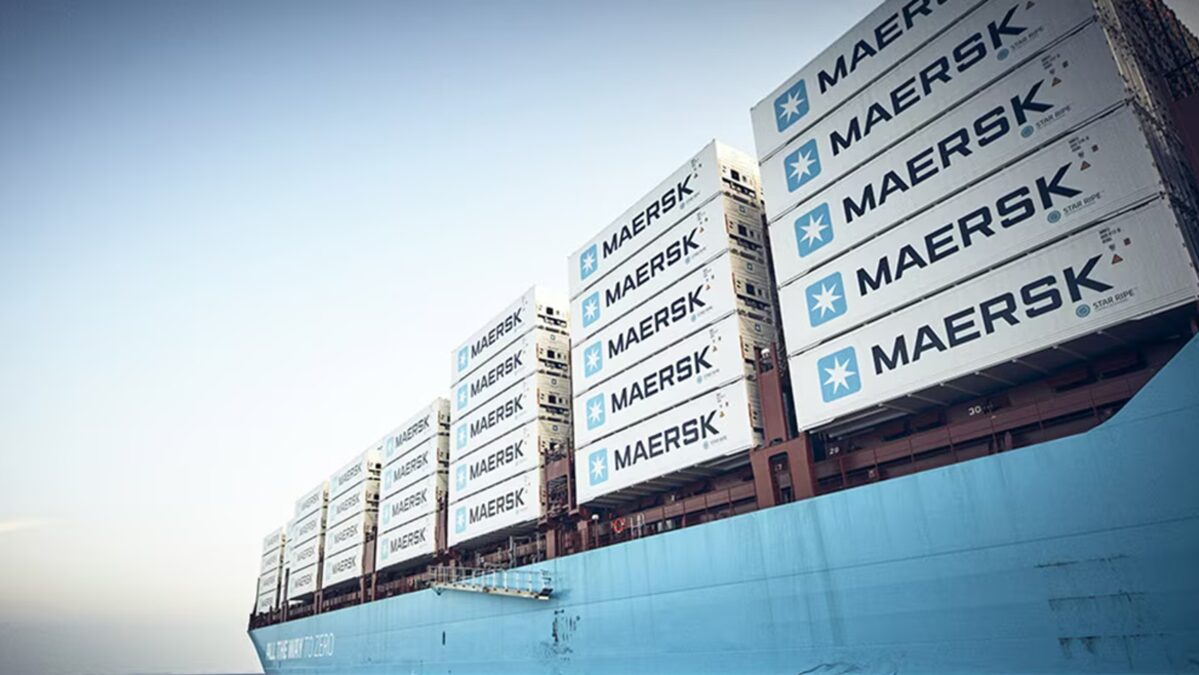
Global shipping major Maersk has announced plans to reduce its corporate workforce by around 1,000 roles worldwide, citing continued pressure from declining freight rates and persistent instability in global trade conditions. The move represents roughly 15% of the company’s corporate positions but accounts for less than 1% of Maersk’s overall workforce, which totals about 100,000 employees globally.
According to the company, the job reductions form part of a broader organisational restructuring aimed at simplifying internal operations, lowering administrative costs, and improving long-term efficiency. Maersk estimates the measures will generate annual savings of approximately $180 million. The company also signalled a stronger push toward automation and expanded use of artificial intelligence across corporate functions to streamline processes and enhance productivity.
The layoffs are expected to primarily affect office-based and support roles rather than operational staff in ports, vessels, or logistics handling. For impacted employees, the decision represents a significant disruption, particularly as reductions are concentrated in professional and managerial segments of the workforce.
Maersk’s latest financial performance reflects the challenging environment facing the global shipping sector. The company reported revenue of about $54 billion for 2025, compared with $55.5 billion in the previous year. While shipping volumes increased by nearly 5% during the period, profitability declined sharply due to falling freight prices and excess vessel capacity across major trade routes.
Net profit dropped to roughly $2.7 billion in 2025, down from $6.1 billion in 2024, representing a decline of more than 50%. Earnings from ocean transport — a core segment of Maersk’s business — fell by nearly one-third to about $6.3 billion, marking the lowest net profit level recorded in the past five years. Operating profit also decreased significantly, reaching approximately $3.5 billion compared with $6.5 billion the year before.
The company attributed the weaker results to continued volatility in global trade flows throughout 2025. Disruptions included the closure of key Red Sea shipping routes, the introduction of new tariffs in several markets, and ongoing geopolitical tensions affecting supply chains and transportation demand. These factors contributed to uncertainty in cargo movement and downward pressure on freight pricing despite steady shipment volumes.
Looking ahead, Maersk expects global container demand to grow modestly in 2026. However, the company cautioned that profitability will remain highly sensitive to freight rate movements and broader economic conditions. Based on current market assumptions, Maersk indicated its operating outcome for the coming year could range from a loss of about $1.5 billion to a profit of roughly $1 billion, underscoring the uncertainty facing the industry.
Industry analysts note that shipping companies worldwide have been adjusting capacity, costs, and investment strategies following the sharp post-pandemic decline in freight rates. During the pandemic-era surge in demand, container shipping generated record earnings, prompting fleet expansion and higher operating expenses. As trade patterns normalised and capacity increased, pricing power weakened, compressing margins across the sector.
For Maersk employees, the announced layoffs highlight the broader structural changes underway in global logistics. While the majority of the company’s workforce will remain unaffected, those in eliminated corporate roles face job uncertainty amid a shifting employment landscape influenced by cost control measures and digital transformation.
Maersk stated that it intends to support affected staff through transition assistance and related measures in accordance with local regulations and company policies. The restructuring, the company said, is designed to position the organisation for more stable performance in a volatile trade environment while maintaining competitiveness in the long term.
The announcement reflects continuing pressure on large logistics providers to balance operational resilience with financial discipline as global trade conditions evolve.

 Get it on Play Store