


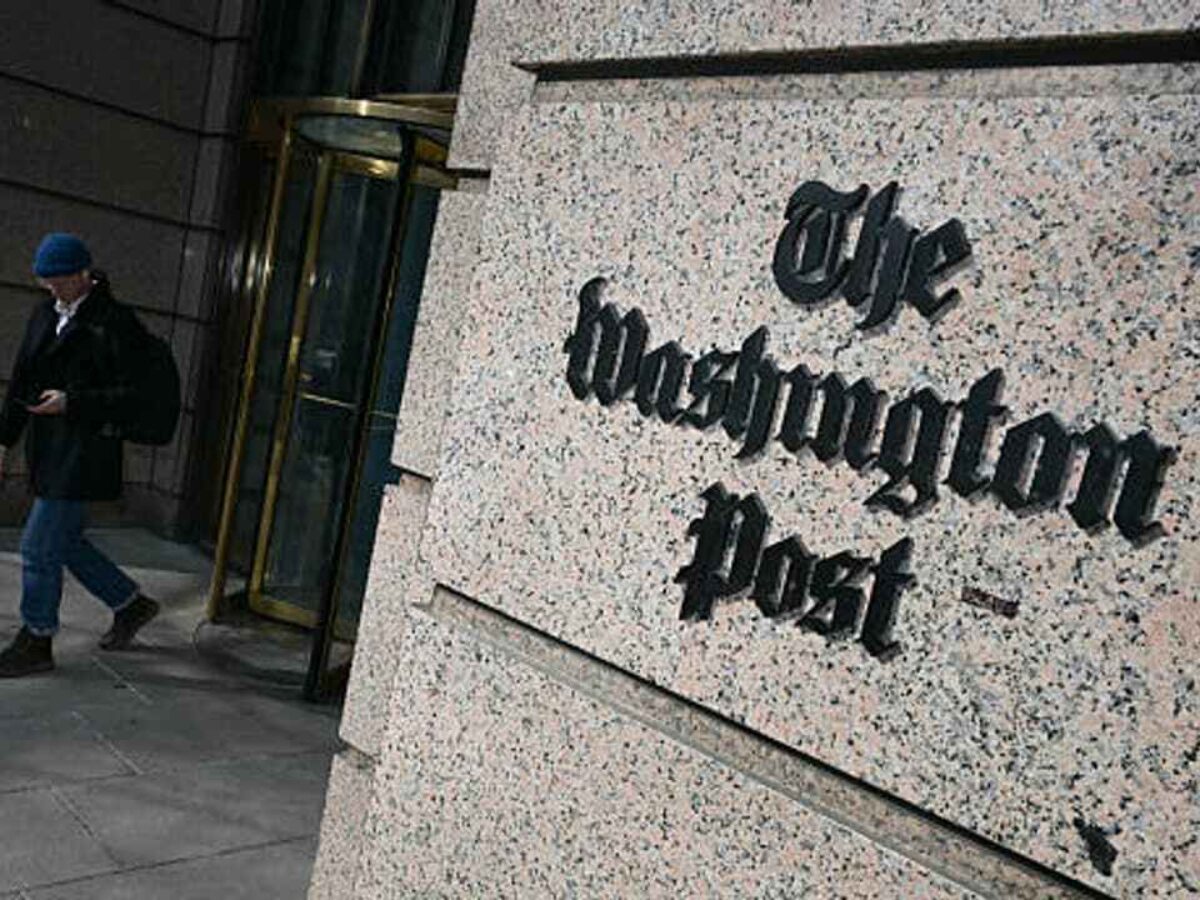
The Washington Post has announced plans to reduce its workforce significantly, a move that is expected to affect more than 300 employees and substantially scale back coverage across several editorial areas, including sports, local reporting and international news. The decision, disclosed on 4 February 2026, is part of a broader effort by the newspaper to address declining readership, financial pressures and structural changes in the media industry.
Owned by Amazon founder Jeff Bezos, the publication described the layoffs as a necessary step toward long-term stability. According to statements attributed to Executive Editor Matt Murray in media reports, the Post has experienced a notable decline in online traffic over the past three years. Leadership has linked part of this shift to rapid technological changes, including the growing influence of artificial intelligence on how audiences discover and consume news.
Editors also indicated that the organisation must move away from legacy workflows and rethink both its journalistic approach and business model to remain competitive in a rapidly evolving digital environment. The restructuring is therefore positioned as an attempt to realign resources with audience behaviour and sustainable revenue streams rather than a short-term cost-cutting measure alone.
Impact Across Newsroom Functions
Reports suggest that newsroom teams covering foreign affairs, metropolitan news in Washington, DC, and sports journalism are among the most heavily affected. Some journalists have indicated on social media that entire reporting units may have been eliminated, including coverage focused on the Middle East. A correspondent based in Ukraine was also reportedly among those laid off despite ongoing conflict coverage, underscoring the depth of the cuts within international reporting.
Local reporting in Washington, DC—long considered central to the newspaper’s identity—has also faced substantial reductions, according to accounts from staff members. While the company has not publicly detailed the precise distribution of layoffs across departments, the scale of the restructuring suggests a major shift in editorial priorities.
Reaction From Staff and Unions
The announcement has prompted strong reactions from employees and union representatives. The Washington Post Guild criticised the decision, warning that reducing newsroom capacity could weaken the publication’s journalistic mission and risk further erosion of reader trust and engagement.
Several departing journalists expressed frustration publicly, particularly those working in international coverage areas. Their responses reflect broader concerns within the media sector about shrinking resources for in-depth and on-the-ground reporting at a time of complex global events.
Broader Financial and Strategic Context
The layoffs follow a period of ongoing financial strain and organisational change at the newspaper. In 2024, the Post reportedly lost a substantial number of subscribers after choosing not to endorse a candidate in the US presidential election—breaking with longstanding editorial tradition.
More recently, shifts in the direction of the opinion section, including a greater emphasis on themes such as personal liberty and free markets, were linked in reports to internal disagreement and the resignation of a senior editor. These developments have contributed to perceptions of strategic uncertainty during a challenging phase for the publication.
The Post’s difficulties also stand in contrast to performance reported by some competitors. For example, The New York Times disclosed significant gains in digital-only subscriptions toward the end of 2025, highlighting diverging trajectories among major news organisations navigating the transition to reader-funded digital models.
Industry-Wide Pressures
The restructuring reflects wider trends affecting global journalism. Traditional advertising revenues have declined for years, while digital subscription growth has become uneven across publishers. At the same time, artificial intelligence–driven search tools, content aggregation and changing audience habits are reshaping how readers access news, placing additional pressure on legacy media business models.
News organisations worldwide are experimenting with cost controls, new subscription strategies, partnerships and AI-assisted workflows in response. Workforce reductions—particularly in legacy print-era structures—have become increasingly common as publishers attempt to balance editorial ambition with financial sustainability.
Outlook for the Publication
For The Washington Post, the latest layoffs mark one of the most significant newsroom contractions in recent years and signal a pivotal moment in its ongoing transformation. Leadership has framed the changes as essential to preserving the organisation’s long-term future, though critics argue that reduced reporting capacity could further challenge readership growth.
How effectively the newspaper adapts—through digital innovation, audience engagement strategies and revised editorial focus—will likely determine whether the restructuring stabilises operations or leads to additional disruption.
The developments underscore a broader reality facing the news industry: even globally recognised publications with influential ownership must continually reinvent their economic and editorial models to remain viable in a rapidly shifting media landscape.

 Get it on Play Store